Commercial & Industrial Solar System
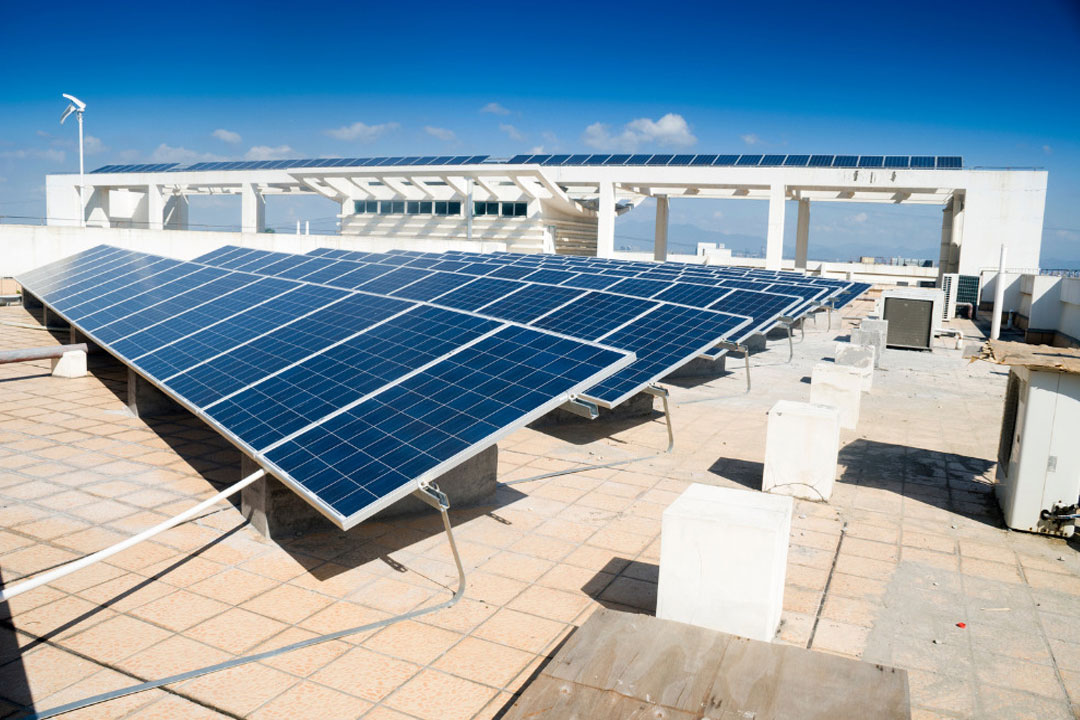
A commercial and industrial solar panel system is a high-capacity photovoltaic (PV) installation designed to generate electricity for businesses, commercial establishments, and industrial facilities by converting sunlight into electricity, making it suitable for on-site consumption or export to the grid. These systems are engineered for large-scale energy demands and are scalable to accommodate future expansion. They offer substantial cost savings by reducing dependence on conventional energy sources, while also providing long operational lifespans and advanced monitoring capabilities for performance tracking and maintenance. Such installations are ideal for reducing operational costs, enhancing energy security, and contributing to sustainability goals in both commercial and industrial sectors.
Salient Features
- Cost Reduction & Savings: Businesses can significantly lower their electricity bills by generating their own free, renewable energy.
- Environmental Impact: Installing a commercial solar system reduces a company’s carbon footprint, promoting sustainability and green initiatives.
- Energy Independence: A solar system provides a more stable and less expensive energy source, making businesses less dependent on fluctuating grid electricity prices.
- High-Efficiency Panels: Commercial-grade solar panels are designed for high performance and durability to meet the substantial energy demands of commercial operations.
- Long-Term Asset: Commercial solar panels are a long-term investment, providing reliable, free electricity for over 25 years.
- High Capacity: Commercial and industrial systems range from small installations of 25 kilowatts to large systems of several megawatts, designed to meet the significant energy demands of businesses.
- Durability & Reliability: Panels are built with high-quality materials to withstand extreme weather, wind, and hail, ensuring consistent performance over their long lifespan.
- Scalability & Flexibility: Systems can be expanded or adapted to changing energy needs, and installations can be customized for various locations, including rooftops, ground-mounted arrays, and even parking structures.
- Advanced Monitoring: Solar performance monitoring systems provide real-time data on energy output and consumption, allowing for optimization and quick identification of potential problems.
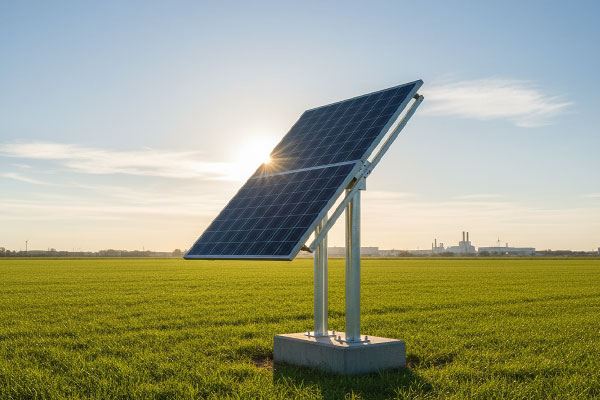
Salient Features of Sudarshan Saur’s Non-DCR G12R TOPCon Glass to Glass Modules
- ✔ Higher Efficiency TOPCon G12R Modules: TOPCon modules achieve higher conversion rates up to 23% ideal for industrial & commercial power projects with maximizing light absorption, resulting in greater energy production per unit area.
- ✔ Improved Low-Light Performance: These panels perform better in cloudy conditions and during early mornings or late afternoons, increasing overall energy yield.
- ✔ Excellent Temperature Resistance: TOPCon cells have a lower temperature coefficient (around -0.30%/°C), meaning they lose less efficiency in high temperatures, making them more resilient in hot environments.
- ✔ Low Degradation: The technology significantly reduces light-induced degradation (LID) caused by boron-oxygen pairs in the cells, leading to a longer lifespan and sustained performance over time.
- ✔ Enhanced Energy Yield: The combination of higher efficiency, better low-light performance, and reduced degradation results in a hig